
Choosing an Arabic language course in Karachi can feel difficult when there are many classes, teachers and learning options available. A good course should match your purpose, current level and learning style rather than simply promising fast results.
Whether you want to learn Arabic for conversation, travel, academic study, Islamic studies, the Qur’an, work or personal interest, the right course should give you a clear learning path and regular opportunities to use the language.
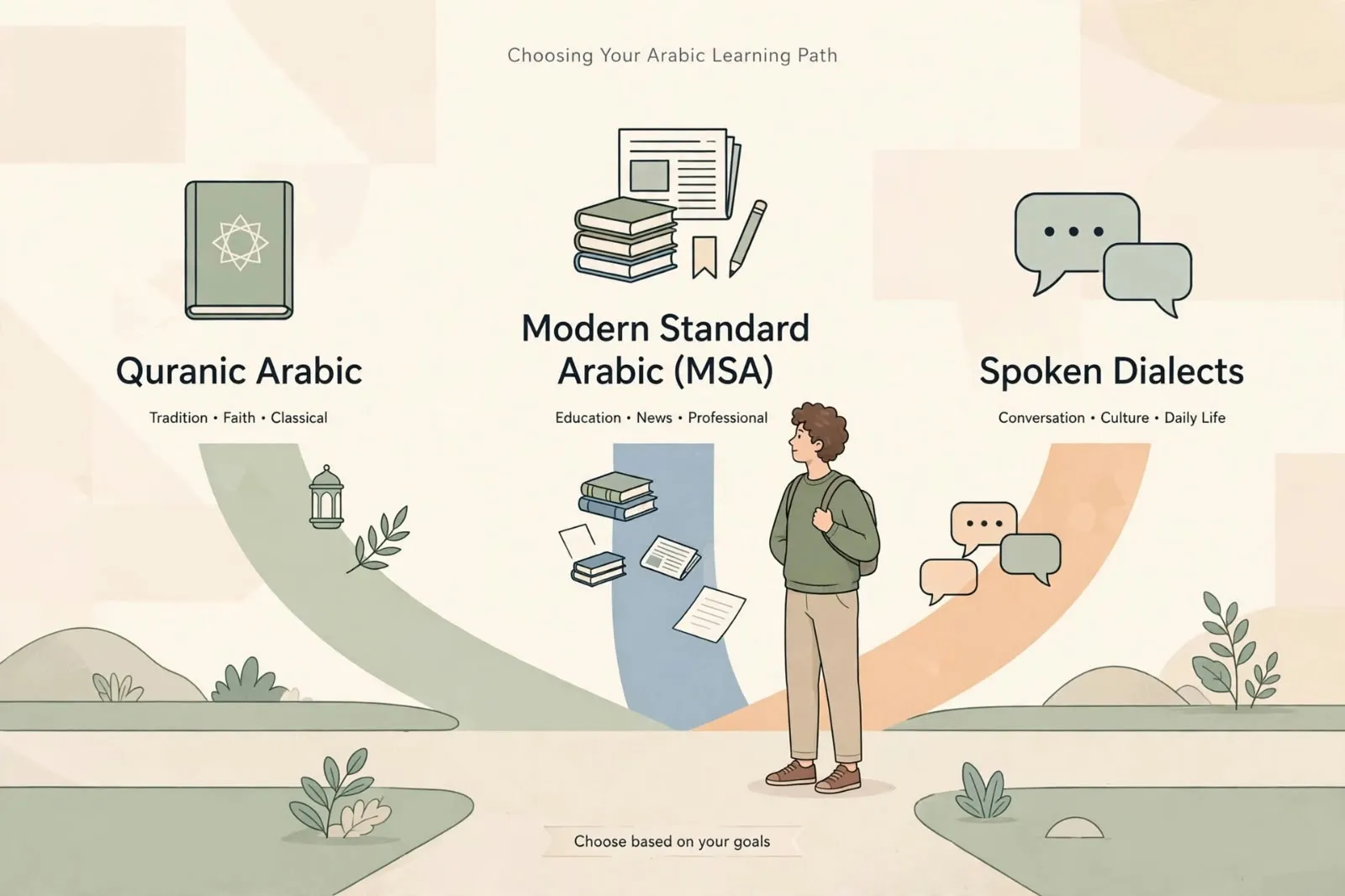
Arabic is a rich language with different forms and varieties. For this reason, one of the first questions to ask is what kind of Arabic you actually want to learn. A course designed for everyday communication may be very different from one focused on Qur’anic Arabic, classical Arabic or formal Modern Standard Arabic.
What Should You Look for in an Arabic Language Course?
A useful Arabic course should combine clear teaching, regular practice and opportunities to apply what you learn.
Before enrolling, consider these important points.
1. Start With Your Learning Goal
Your reason for learning Arabic should influence your choice of course.
If your goal is conversation, look for a course that includes speaking and listening practice. If you want to understand Arabic texts, you may need stronger training in grammar, vocabulary and reading comprehension.
For example, a learner preparing for travel may need practical expressions such as greetings, directions and everyday questions. A student interested in Islamic studies may need a stronger foundation in formal Arabic, vocabulary and text analysis.
A course should therefore answer a simple question: What will I be able to do in Arabic after completing this level?
2. Check the Level Before You Begin
A beginner should not be placed in an advanced class simply because they know a few Arabic words.
A good course should identify your starting level and explain what you need to learn next. This can be done through a short assessment, conversation, written exercise or discussion with the teacher.
Ask whether the course has different levels such as beginner, elementary, intermediate and advanced. A clear level structure makes it easier to measure your progress.
3. Look at the Course Content
Do not choose a course only because its advertisement says “learn Arabic quickly.”
Ask what is actually taught.
A balanced beginner Arabic course may include:
- Arabic alphabet and pronunciation
- Basic vocabulary
- Greetings and introductions
- Simple sentence formation
- Essential grammar
- Listening practice
- Speaking practice
- Reading and writing
- Everyday expressions
- Questions and answers
As learners progress, they can move towards longer conversations, more complex grammar, reading texts and expressing their own ideas.
The course content should be appropriate for your level rather than overloaded with information.
4. Make Sure You Will Actually Speak
Knowing Arabic grammar does not automatically mean that you can communicate in Arabic.
Speaking practice is especially important for learners who want practical communication skills. A course should give students opportunities to answer questions, describe situations, introduce themselves, express opinions and participate in short conversations.
For example, instead of only memorizing the verb ذهبَ, a learner can practice sentences such as:
“أذهب إلى العمل كل يوم.”
“I go to work every day.”
This small difference turns vocabulary and grammar into usable language.
5. Ask About the Teacher’s Experience
The teacher is one of the most important parts of a language course.
Before enrolling, consider the teacher’s academic background, teaching experience and experience with learners at your level.
A teacher may have excellent knowledge of Arabic but still need strong teaching skills to explain difficult concepts to beginners.
A good language teacher should be able to simplify difficult grammar, correct mistakes respectfully, encourage students to speak and adapt explanations when a learner is struggling.
6. Consider the Teaching Method
Different teachers use different approaches.
Some courses focus heavily on grammar and translation. Others concentrate more on conversation. The best choice depends on your purpose.
For many learners, a combination works well: learn the structure, understand the meaning, practise it and then use it in a real situation.
This is particularly useful when learning Arabic because students need to develop several skills at the same time.
At Afra Linguistic Academy, the learning philosophy follows the ALA method:
A — Active
Learn actively through participation and practice.
F — Functional
Learn language that has a practical purpose.
R — Real
Use Arabic in realistic situations.
A — Application
Apply what you have learned through communication and practice.
7. Check Whether the Course Includes Practice
Language learning requires regular practice.
A course may have excellent lessons, but progress can be slow if students only attend class and do nothing between sessions.
Ask whether the course provides speaking tasks, vocabulary revision, reading activities, homework or other forms of practice.
Even ten or fifteen minutes of daily Arabic can be useful when the practice is consistent and connected to what you are learning.
8. Look for Realistic Class Sizes
Class size can affect how much speaking practice you receive.
In a very large class, students may have limited opportunities to speak individually. A smaller group or one-to-one course can provide more direct interaction with the teacher.
However, a small class is not automatically better. What matters is whether the course gives you enough meaningful practice and feedback.
Before enrolling, ask how many students are normally in each class and how much individual participation is expected.
9. Ask What Kind of Arabic Is Being Taught
This is particularly important when choosing an Arabic course in Karachi.
“Arabic” can refer to different learning goals.
You may want to study:
- Modern Standard Arabic
- Classical Arabic
- Qur’anic Arabic
- Spoken Arabic
- A specific Arabic dialect
- Arabic for academic purposes
- Arabic for professional communication
These areas overlap, but they are not identical.
A learner should know what form of Arabic the course focuses on before paying the fee. If your goal is conversation, for example, ask how much spoken Arabic is included. If your goal is reading Arabic texts, ask how much attention is given to grammar and reading comprehension.
10. Consider the Schedule and Course Format
A good course should fit your routine.
In Karachi, learners may have different schedules because of university, school, work, family responsibilities or other commitments.
Before joining a course, check:
- Class days
- Class duration
- Number of classes per week
- Online or onsite format
- Makeup-class policy
- Homework expectations
- Course duration
A realistic schedule is more useful than choosing a course that you cannot attend consistently.
Questions to Ask Before Enrolling
Before choosing an Arabic language course, ask the teacher or academy a few simple questions:
1. What level is this course for?
2. What type of Arabic will I learn?
3. What will I be able to do after completing the course?
4. How much speaking practice is included?
5. Will I receive individual feedback?
6. How many students are in the class?
7. What materials are included?
8. How long is the complete course?
9. Is there a placement assessment?
10. Can I attend a trial or introductory session?
The answers can help you compare courses based on learning value rather than advertising alone.
Online or Onsite Arabic Classes in Karachi?
Both online and onsite learning can work well.
Onsite classes can be useful for learners who prefer a physical classroom and direct interaction with other students. Online classes can provide greater flexibility and allow learners to study from home or from another location.
The important question is not simply whether a course is online or onsite. Ask whether the format allows you to listen, speak, practice, receive feedback and apply Arabic regularly.
For one-to-one online learning, the teacher can also adapt lessons according to the learner’s specific goals and pace.
What Makes a Good Arabic Course Different?
A good Arabic course is not simply a collection of grammar lessons and vocabulary lists.
It should help you move through a learning process:
Understand → Practice → Speak → Correct → Apply
For example, after learning a new expression, you should have an opportunity to use it in a question, answer or short conversation.
This is how language knowledge gradually becomes communication ability.
A learner should also feel comfortable making mistakes. Mistakes are a normal part of language learning. The purpose of correction is not to discourage the learner but to help them communicate more accurately over time.
A Simple Checklist for Choosing an Arabic Course
Before making your decision, check whether the course offers:
- A clear level and learning pathway
- A teacher with relevant teaching experience
- Practical and understandable course content
- Regular speaking and listening practice
- Reading and writing development
- Appropriate grammar instruction
- Individual feedback
- Suitable class size
- A schedule you can maintain
- Clear information about the type of Arabic taught
- A realistic course duration
- Opportunities to apply Arabic outside the lesson
If most of these points are present, you are more likely to find a course that supports meaningful progress.
Frequently Asked Questions
How do I choose the best Arabic language course in Karachi?
Start by identifying your goal and the type of Arabic you want to learn. Then compare the teacher’s experience, course structure, speaking practice, class size, schedule and learning support rather than choosing only by price.
Is Arabic difficult to learn?
Arabic can be challenging because of its grammar, vocabulary, pronunciation and writing system, but beginners can make steady progress with structured lessons and consistent practice. The difficulty also depends on your previous language-learning experience and your goals.
Should I learn Modern Standard Arabic or spoken Arabic?
It depends on your purpose. Modern Standard Arabic is useful for formal communication, reading, news and many educational contexts, while spoken Arabic is more directly useful for everyday conversation. Some learners benefit from studying both progressively.
Is an online Arabic course effective?
Yes, an online course can be effective when it includes active participation, speaking practice, feedback and regular application. The quality of teaching and the learner’s consistency matter more than the format alone.
How long does it take to learn Arabic?
There is no single answer because progress depends on your starting level, goals, study time and consistency. A learner who practices regularly and uses Arabic outside class will generally progress more effectively than someone who studies only during lessons.
Should I take a trial class before enrolling?
A trial or introductory class can help you understand the teacher’s teaching style, the level of the course and the amount of student participation. If a trial is available, use it to ask questions and see whether the course matches your learning goals.
Take Your First Step
Choosing the right Arabic course is the beginning, not the end, of your language-learning journey.
Before enrolling, ask yourself three questions:
Why do I want to learn Arabic?
What kind of Arabic do I need?
How will I practice using it?
Once these questions are clear, it becomes much easier to choose a course that fits your needs.
At Afra Linguistic Academy, Arabic learning is approached through active learning, functional language, real communication and practical application. The goal is not simply to collect vocabulary or memories grammar rules, but to help learners gradually use Arabic with greater clarity and confidence.
Choose the course that helps you use Arabic—not just study Arabic.
Explore our *Arabic Language Program* to find a learning path suited to your level and goals.
Frequently Asked Questions
What is the first step to choosing an Arabic course in Karachi?
Define your goal - conversation, Qur'anic , Classical , or Modern Standard Arabic- and choose a course that shows what you will be able to do after each level .
Does a good Arabic course include speaking practice?
Yes , A good course should include opportunities to answer questions, describe situations , and participate in short conversations with feedback.
Learn With Afra
Arabic Language Program
Turn what you’ve read into real progress with structured, personal teaching — live online or in Karachi.